
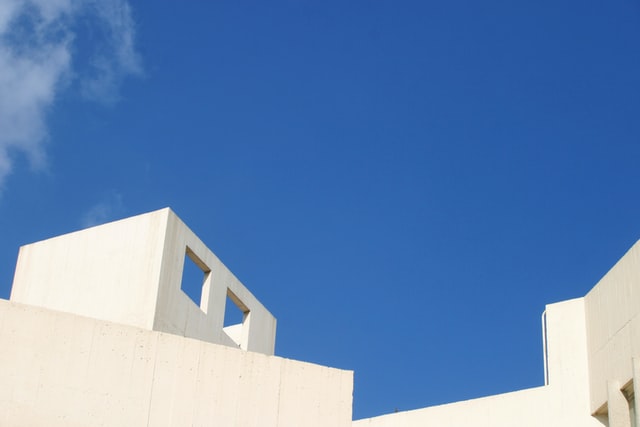
Joan Miro Museum
The Fundaciò Joan Miró is one of the best museums that Barcelona has to offer. A museum organized and designed, in 1975, by the artist himself. A museum where the artist himself conceives it, becomes a temple of art with the face of the artist.
The visit to the Joan Miró Museum begins even before she did. The building that houses the museum is a true work of rationalist architecture, with Mediterranean characteristics. It is the work of the architect Josep Lluís Sert, a friend of Miró’s and promoter of avant-garde architecture in Catalonia. It is therefore interesting to appreciate the building before entering and see how it combines with the blue sky. Inside, the building functions as an open door to the city with a terrace overlooking Barcelona and gardens that integrate art with architecture.
A large part of the museum’s collection was donated by Joan Miró in 1975, when the museum was founded. Another part was donated by friends and relatives of the artist. A visit to the museum allows us to understand Joan Miró’s work as a whole, as it is possible to follow his trajectory from the beginning to the end of his life. We can see, for example, that in the beginning he did not use the basic colours of blue, red, yellow and black, which he would adopt throughout his career and which we know so well today. Like all artists, Miró devoted himself to painting landscapes, still lifes and places from his childhood until he adopted his own style.
Miró was an artist involved in Spain, Catalonia and the history of his country. For this reason, one of the museum’s most outstanding collections is the one that brings together works made during the Spanish Civil War and the Second World War. These are beautiful works whose shapes and colours make us wonder about the atrocity of war. May 1968 (painted between 68 and 73) and Tapiz de la fundació (1979). These are works whose colours and shapes leave you hypnotized.
Of course, Miró has a self-portrait done in oil and pencil. It is as fun and childish as Miró’s work. Many people avoid going to some artists’ museums because they think they won’t understand the paintings, sculptures and other arts. Joan Miró’s work depicts a dreamlike, unconscious and childlike world. Thus, it is not difficult for children to identify with the work of this great artist. On the other hand, it also provokes our identification with his work, because the unconscious and the world of dreams need no explanation. It’s all about feeling. So is art. A question of feeling and identification. You can identify with Miró’s work or not and you will know whether you liked it or not.
Where it is:
Montjuïc Park
How to get there:
Bus 50 or 150 Metro + Funicular.
Opening hours:
Billet d’entrée : 13 euros, gratuit enfant de moins de 15 ans
Tuesday, Wednesday and Friday
From November to March: 10am – 6pm
From April to October: 10am – 8pm
Thursday: 10 am – 9 pm
Saturday 10 am – 8 pm
Sundays and public holidays: from 10 am to 2.30 pm
Monday: closed
https://www.fmirobcn.org/en/
https://goo.gl/maps/S5rurDanK8dDiASo6


